


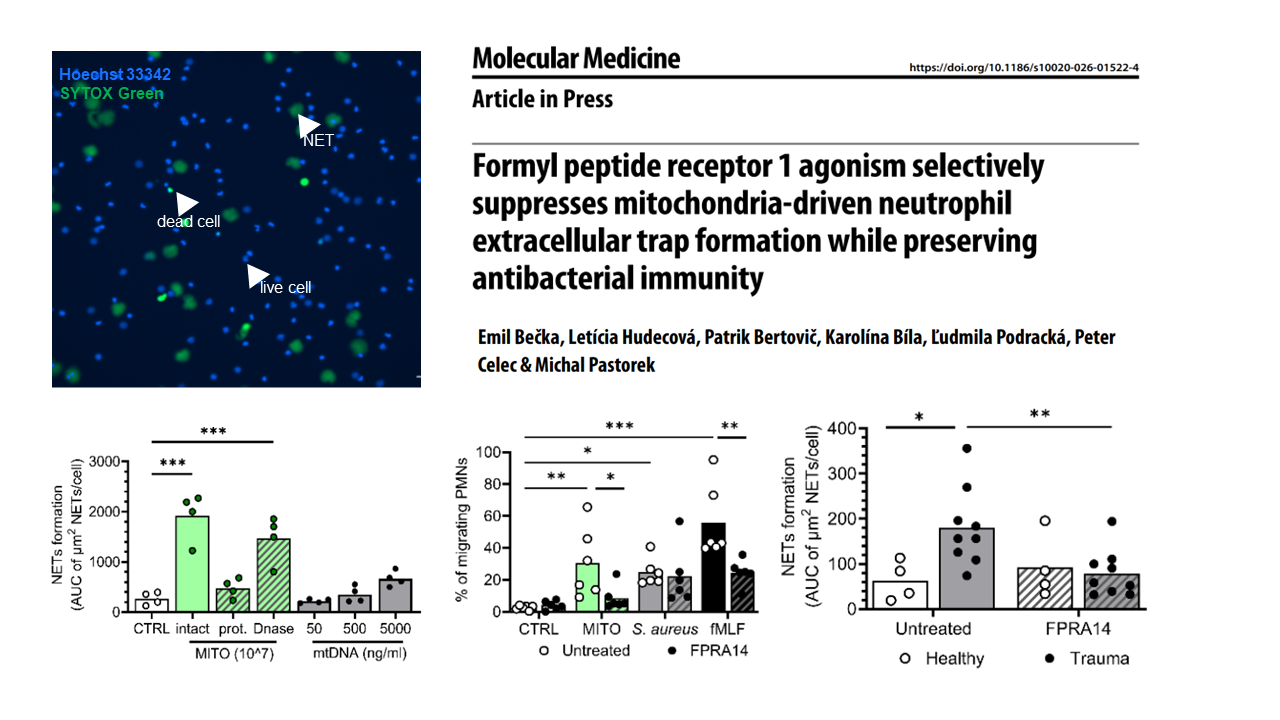
Congratulations to several of our colleagues led by Associate Professor Michal Pastorek, and especially to our PhD student Emil Bečka on his first-author publication in a prestigious journal Molecular Medicine. They investigated the mechanisms by which mitochondrial molecules released after trauma trigger the formation of neutrophil extracellular traps (NETs) – a process that can worsen tissue damage and increase susceptibility to infections. They found that this pathological process is driven by the coordinated activation of Toll-like receptor 9 (TLR9) and formyl peptide receptor 1 (FPR1), and that targeted desensitization of FPR1 using the agonist FPRA14 can suppress the excessive inflammatory response without impairing the ability of neutrophils to fight bacteria. These findings open a promising avenue for new preventive strategies to limit harmful sterile inflammation following trauma or surgical procedures.